TOP-SECRET-Historical Archives Lead to Arrest of Police Officers in Guatemalan Disappearance

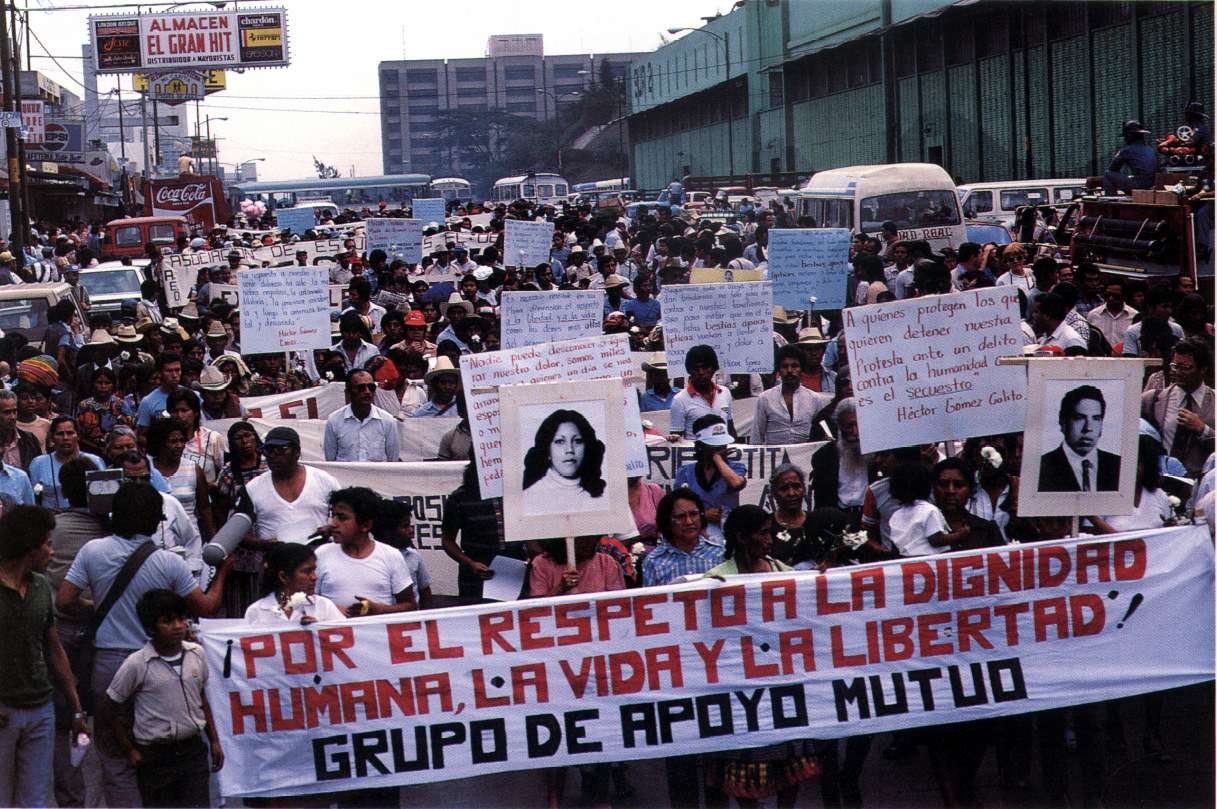
Demonstration by the GAM on April 13, 1985 following the deaths of GAM leaders, Héctor Gómez and Rosario Godoy de Cuevas. Photo from; “Guatemala: Eternal Spring, Eternal Tyrany.” [Courtesy of Jean-Marie Simon]

Historical Archives Lead to Arrest of Police
Officers in Guatemalan Disappearance

Declassified documents show U.S. Embassy knew
that Guatemalan security forces were behind
wave of abductions of students and labor leaders

National Security Archive calls for release of military files
and investigation into intellectual authors of the 1984
abduction of Fernando García and other disappearances

National Security Archive Electronic Briefing Book No. 273

By Kate Doyle and Jesse Franzblau

Washington, DC, September 14, – Following a stunning breakthrough in a 25-year-old case of political terror in Guatemala, the National Security Archive today is posting declassified U.S. documents about the disappearance of Edgar Fernando García, a student leader and trade union activist captured by Guatemalan security forces in 1984.The documents show that García’s capture was an organized political abduction orchestrated at the highest levels of the Guatemalan government.

Guatemalan authorities made the first arrest ever in the long-dormant kidnapping case when they detained Héctor Roderico Ramírez Ríos, a senior police officer in Quezaltenango, on March 5th and retired policeman Abraham Lancerio Gómez on March 6th as a result of an investigation into García’s abduction by Guatemala’s Human Rights Prosecutor (Procurador de Derechos Humanos—PDH). Arrest warrants have been issued for two more suspects, Hugo Rolando Gómez Osorio and Alfonso Guillermo de León Marroquín. The two are former officers with the notorious Special Operations Brigade (BROE) of the National Police, a unit linked to death squad activities during the 1980s by human rights groups.

According to the prosecutor Sergio Morales, the suspects were identified using evidence found in the vast archives of the former National Police. The massive, moldering cache of documents was discovered accidentally by the PDH in 2005, and has since been cleaned, organized and reviewed by dozens of investigators. The National Security Archive provided expert advice in the rescue of the archive and posted photographs and analysis on its Web site. Last week, Morales turned over hundreds of additional records to the Public Ministry containing evidence of state security force involvement in the disappearance of other student leaders between 1978 and 1980. As the Historical Archive of the National Police prepares to issue its first major report on March 24, more evidence of human rights crimes can be expected to be made public.

Government Campaign of Terror

The abduction of Fernando García was part of a government campaign of terror designed to destroy Guatemala’s urban and rural social movements during the 1980s. On February 18, 1984, the young student leader was captured on the outskirts of a market near his home in Guatemala City. He was never seen again. Although witnesses pointed to police involvement, the government under then-Chief of State Gen. Oscar Humberto Mejía Víctores always denied any role in his kidnapping. According to the Historical Clarification Commission’s report released in 1999, García was one of an estimated 40,000 civilians disappeared by state agents during Guatemala’s 36-year civil conflict.

In the wake of García’s capture, his wife, Nineth Montenegro – now a member of Congress – launched the Mutual Support Group (Grupo de Apoyo Mutuo—GAM), a new human rights organization that pressed the government for information about missing relatives. Co-founded with other families of the disappeared , GAM took shape in June of 1984, holding demonstrations, meeting with government officials and leading a domestic and international advocacy campaign over the years to find the truth behind the thousands of Guatemala’s disappeared. The organization was quickly joined by hundreds more family members of victims of government-sponsored violence, including Mayan Indians affected by a brutal army counterinsurgency campaign that decimated indigenous communities in the country’s rural highlands during the early 1980s.

Declassified U.S. records obtained by the National Security Archive under the Freedom of Information Act indicate that the United States was well-aware of the government campaign to kidnap, torture and kill Guatemalan labor leaders at the time of García’s abduction. “Government security services have employed assassination to eliminate persons suspected of involvement with the guerrillas or who are otherwise left-wing in orientation,” wrote the State Department’s Bureau of Intelligence and Research four days after García disappeared, pointing in particular to the Army’s “notorious presidential intelligence service (archivos)” and the National Police, “who have traditionally considered labor activists to be communists.”

The U.S. Embassy in Guatemala considered the wave of state-sponsored kidnappings part of an effort to gather information on “Marxist-Leninist” trade unions. “The government is obviously rounding up people connected with the extreme left-wing labor movement for interrogation,” wrote U.S. Ambassador Frederic Chapin in a cable naming six labor leaders recently captured by security forces, including García. Despite reports that García was already dead, the ambassador was “optimistic” that he and other detainees would be released after questioning.

Many of the kidnapping victims noted in U.S. records included in this briefing book also appear in the “Death Squad Dossier,” an army intelligence logbook listing 183 people disappeared by security forces in the mid-1980s. In 1999, the National Security Archive obtained the original logbook and released a public copy. The logbook indicates that García was among dozens of students, professors, doctors, journalists, labor leaders and others subjected to intensive army and police surveillance in the weeks leading up to their capture, disappearance and – in about half of the cases – execution. The logbook entry listing Fernando García includes his alleged subversive alias names and affiliation to the Guatemalan Communist Party, as well as detailed personal information taken from official documents such as his national identification card and his passport. Other victims listed in the Death Squad Dossier who are named in the U.S. documents posted today include Amancio Samuel Villatoro, Alfonso Alvarado Palencia, José Luis Villagrán Díaz and Santiago López Aguilar. U.S. records describe their disappearances in the context of the government campaign to systematically dismantle Guatemala’s labor movement.

The U.S. records posted today contain illuminating information on how the use of illegal kidnapping as a counterinsurgency strategy reached a peak during the government of Oscar Mejía Víctores. U.S. figures estimated that there was an average of 137 abductions a month under the Mejía Víctores regime during 1984. According to one extensive State Department report written in 1986, part of the modus operandi of government kidnapping involved interrogating victims at military bases, police stations, or government safe houses, where information about alleged connections with insurgents was “extracted through torture.” The security forces used the information to conduct joint military/police raids on houses throughout the city, secretly capturing hundreds of individuals who were never seen again, or whose discarded bodies were later discovered showing signs of torture. The National Police, subservient to the Army hierarchy, created special units to assist the military in the urban counter-guerrilla operations.

The records also demonstrate military efforts to cover up their role in the extra-legal activities. In 1985, for example, as Guatemala prepared to transition to a civilian government for the first time in a quarter of a century, the Army ordered the Archivos – which the State Department called “a secret group in the President’s office that collected information on insurgents and operated against them” – to move its files out of presidential control and into the Intelligence Directorate (D-2) section of the military.

U.S. documents also chronicled developments as members of GAM became targets of government violence themselves. GAM members suffered the worst period of violence during Easter “holy week” in 1985, beginning with the kidnapping of senior member Héctor Gómez Calito, whose tortured and mutilated body was found on March 30, 1985. According to one U.S. Embassy source, agents from the Detectives Corps of the National Police had been gathering information on Gómez in the days leading to his abduction. Two weeks before his disappearance, Chief of State Oscar Mejía Víctores publicly charged that GAM members were being manipulated by guerrillas and questioned the sources of their funding. Following his murder, GAM co-founder and widow of missing student leader Carlos Ernesto Cuevas Molina, Rosario Godoy de Cuevas, who had delivered the eulogy at Gómez Calito’s funeral, was found dead at the bottom of a ditch two miles outside Guatemala City, along with her 2-year-old son and 21-year-old brother. While the government claimed their deaths was an accident, Embassy sources discounted the official version of the events, and claimed that Godoy was targeted and her death a premeditated homicide. Human rights monitors who had seen the bodies reported that the infant’s fingernails had been torn out.

Future Investigations

The arrest of the police officers in Guatemala is an unprecedented step in the struggle against impunity, and a testament to the investigative efforts being carried out in the historical National Police archive. The declassified records, however, demonstrate that Fernando García’s disappearance was not an ordinary police arrest, but rather an organized political abduction orchestrated by the highest-levels of government. In addition to the police files that have already proven so crucial to breaking new ground in this case, the release of the relevant military files is critical to unraveling what role the Army High Command and Chief of State played in this crime. In addition to the material authors of the crime, those who planned and ordered García’s kidnapping must also be investigated. At the time of his disappearance, the key military and police personnel overseeing Guatemala’s urban counter-terror campaign were:

Head of the Army Intelligence Directorate (D-2): Byron Disrael Lima Estrada
Director of the Presidential General Staff (EMP): Juan José Marroquín Siliezar
Directors of the Archivos: Marco Antonio González Taracena and Pablo Nuila Hub
Chief of the National Police: Héctor Rafael Bol de la Cruz

Oscar Mejía Víctores, Guatemala’s former chief of state, is currently named as one of eight defendants charged with genocide and other crimes in an international criminal case that is being investigated by Judge Santiago Pedraz in the Audiencia Nacional (National Court) of Spain.

The García case is also important in the context of Guatemala’s current struggle against organized crime. The same week authorities arrested the police officers involved in Fernando García’s kidnapping 25 years ago, the PDH announced that retired and active duty police are involved in today’s organized kidnapping gangs. Government prosecutors have announced they are currently investigating at least 10 members of the police’s elite anti-kidnapping unit for involvement in contemporary abductions. The struggle for justice and accountability for Guatemala’s past crimes has a direct relationship to the current efforts to dismantle illegal armed networks. Last week’s arrests marked an important initial step in the right direction towards ending blanket impunity in Guatemala.


U.S. documents on government death squad operations, the disappearance of Edgar Fernando García, and attacks on Guatemala’s Mutual Support Group – GAM

Document 1
February 23, 1984
Trade-Union Leaders Abducted
U.S. Embassy in Guatemala, Classified Cable

The U.S. Embassy in Guatemala informs Washington about the abduction of Fernando García and other trade-union officials in the recent weeks. According to press accounts on his disappearance, armed men kidnapped him while he was walking in Guatemala City on February 18, 1984. The cable provides information on related incidents of abductions of labor activists in the weeks leading up to Fernando García’s capture, describing the disappearances in the context of the widespread government targeting of Guatemala’s labor leaders. The document provides information on the political and organizational affiliation of the recently disappeared labor activists. According to the cable, Fernando García was part of CAVISA, the industrial glass union, which is an “affiliate of the communist trade-union confederation FASGUA,” Guatemala’s autonomous federal trade-union.

It also mentions that the disappeared victims were associated with the CNT (Confederacion Nacional de Trabajadores), and makes reference to the case of the 28 CNT labor leaders, who “disappeared in 1980 in one fell swoop. It is believed that GOG security forces murdered all of them.” The other group mentioned is the National Council for Trade Union Unity – CNUS, which asserted that Fernando García was already dead. Despite those claims, the U.S. Embassy remained “optimistic that Fernando García of CAVISA will be released.” Edgar Fernando García was never seen or heard from again.

Document 2
February 23, 1984

Guatemala: Political Violence Up
U.S. Department of State, secret intelligence analysis

The same day that Embassy officials inform Washington of Fernando García’s disappearance, the State Department produces an intelligence report on the recent spike in political assassinations and disappearances. The intelligence report describes several notable cases of victims in the “new wave of violence,” over the past several weeks, and provides key information on police coordination with military intelligence in government kidnappings. It mentions the recent abduction and release of a labor leader and confirms that “he had been kidnapped by the National Police, who have traditionally considered labor activists to be communists.” It states that the detective corps (the DIT) of the National Police has traditionally been involved in “extra-legal” activities, working alongside the Army’s presidential intelligence unit, the Archivos. 

(Document previously posted: http://www.gwu.edu/~nsarchiv/NSAEBB/NSAEBB15/index.html)

Document 3
March 19, 1984
Guatemala: Democratic Trade Union Confederation CUSG Protests Abductions of Trade-Union Leaders
U.S. Embassy in Guatemala, confidential cable

Less than a month after Fernando García’s disappearance, the U.S. Deputy Chief of Mission in Guatemala, Paul D. Taylor reports on the growing protests from the Confederation of Syndicalist Unity (CUSG) over the recent disappearance of trade-union leaders, “especially the disappearance of STICAVISA trade-union official Edgar Fernando García.” The CUSG blames the disappearances on the “government attempts to destabilize the Guatemalan labor movement,” a charge which the government denies. The cable goes on to describe the individual cases of the disappeared, including the case of the escaped prisoner Álvaro René Sosa Ramos, who “fled to asylum in the Belgian Ambassador’s residence after being shot in an attempt to escape his captors. Once recovered from gunshot wounds, he will be going into exile.” Sosa Ramos is mentioned in the Death Squad Dossier as entry number 87.

The document offers further background as to why the labor leaders are disappearing. According to the U.S. Deputy Chief of Mission Paul D. Taylor, “By picking up leftist trade-union leaders connected with the CNT and the FASGUA, the government of Guatemala – advertently or inadvertently – is destabilizing the Marxist-Leninist wing of the Guatemalan labor movement.” His analysis concludes that the individuals were most likely targeted due to government suspicion that they were connected to armed insurgent groups, and that “security forces are after them for that reason.”

Document 4
April 3, 1984

Guatemala: March 25-29 Visit of U.S. Trade-Union Delegation
U.S. Embassy in Guatemala, classified cable

International pressure continues to mount for investigations into the disappearances of Fernando García and other labor leaders. The cable reports on a trade-union delegation visit to Guatemala, led by former U.S. Assistant Secretary of State for Human Rights Pat Derian. The delegation presses Embassy officials for information on the missing trade-union leaders. The Embassy continues to make the point that “all of these abducted union leaders are from the leftist CNT,” emphasizing the political orientation of the disappeared victims.

The delegation maintains that Fernando García was being held by the army, and asked the Embassy to look into his disappearance, as well as that of Jose Luis Villagrán, “disappeared February 11, 1984 in zone 11.” U.S. officials promise they will “make inquiries to the government about all these people.” Ms. Derian presses further, asking them to make “representations,” not just “inquiries” into the disappearances. Deputy Chief of Mission Paul D. Taylor still maintains, however, that it has yet to be demonstrated “whether government forces seized all these trade-unionists” and further comments “If the GOG has picked them up, it is almost certainly for matters other than their trade-union activities.”

Document 5
April 1, 1985

Murder of Member of Mutual Support Group (GAM)
U.S. Embassy in Guatemala, limited officials use cable

The cable reports on the death of Héctor Orlando Gómez Galito, a member of the activist Mutual Support Group (GAM). The Embassy reports that he was “abducted and assassinated the weekend of March 30-31.” Gómez was kidnapped by unidentified men after leaving a weekly GAM meeting in Zone 11 of Guatemala City, and his body was discovered near the Pacific highway 15 miles from the city. “His assassination follows in the wake of reports that members of the groups had been the subject of unspecified threats.”

The cable lists the co-directors of GAM as Beatriz Velasquez de Estrada, Aura Farfán, Maria Rosario Godoy de Cuevas, Maria Choxom de Castañón, Nineth Montenegro de García, and another Mrs. García, the mother of Edgar Fernando. The cable examines Héctor Gómez Calito’s involvement in the organization, concluding that he may have acted as a spokesperson unofficially because of security concerns. Gómez was one of the group’s planner for a march to be held on April 12 or 13, and, “According to reports, the GAM claims that Gómez was killed because of his involvement with the organization.”

Document 6
April 3, 1985

Background on Case of Héctor Orlando Gómez Calito, Murdered “Mutual Support Group” (GAM) Member: Embassy Discussions with Two Sources
U.S. Embassy in Guatemala, confidential cable

GAM director, Nineth Montonegro de García, and Father Alain Richard, member of Peace Brigades International (PBI), meet with U.S. officials to provide the Embassy with background information on the death of Héctor Gómez. They explain that Gómez had joined GAM following the disappearance of his brother, and had acted as a publicist for the group. Richard tells officials that the police detective corps (DIT) had asked the mayor of the town of Amatitlan, where Gómez was from, for information about his activities, and that his house was reportedly under surveillance by “men in automobiles.”

The Embassy also states “Richard had no doubts that the GOG [the Government of Guatemala] was directly responsible for Gomez’s murder.” Richard added that regardless of the belief that the entire group was being watched, GAM would continue their advocacy efforts. The cable ends by noting “Embassy officers will meet GAM directors on Monday, April 8.”

Document 7
April 4, 1985

Background and Recent Developments of the Mutual Support Group (GAM)
U.S. Embassy in Guatemala, Confidential Cable

The Embassy provides a summary of GAM organizing in March, “with some emphasis on its activist activities (blocking traffic, occupation of government offices, etc.) and the GOG reaction to those activities.” It gives background on the creation of the group, dating its first public appearance in early July 1984, when GAM members began publicly campaigning for an investigation into the disappearances of their relatives and calling upon others to join. They approached the Embassy shortly thereafter, “asking for our assistance on behalf of 67 missing persons.”

A few days after a GAM event in November 1984, they were received by Chief of State General Mejía, where “they repeated their demands” to investigate the disappeared. They met with Mejía a second time, which led to the formation of a government commission ostensibly to look into the GAM charges. In March 1985, they occupied the offices of the Guatemalan Attorney General, “protesting the lack of action by the GOG Tripartite Commission.” Beginning in mid March, the government began to express disapproval of the tactics chosen by GAM to pursue their objectives. Press reports carried warnings issued by Mejía Víctores in which he “charged that the GAM was being manipulated by the insurgents and questioned the source of the group’s funds.”

According to the cable, the Embassy had informed Washington on March 25 that four members of GAM had allegedly received various threats. One of the names on their list was Héctor Gómez, even though he was “not then known to the Embassy in any capacity related to GAM. Additional information regarding the specifics of Gómez’s murder have been provided.”

Document 8
April 6, 1985

Death of Maria Rosario Godoy de Cuevas, a Director of the “Mutual Support Group” (GAM)
U.S. Embassy in Guatemala, Confidential Cable

Before Embassy officials had the chance to meet with GAM members again, another one of their members was killed. “At about 8:00 pm April 4, Maria del Rosario Godoy Aldana de Cuevas, a founder and member of the board of directors of GAM was found dead in her automobile.” Three days after Rosario Godoy de Cuevas delivered the eulogy at Héctor Gómez’ funeral, she was found dead along with her 2-year-old son and 21-year-old brother. U.S. Embassy provides the official story given by the Guatemalan government, that she was “the victim of an apparent vehicular accident.” Embassy sources, however, believe the death was premeditated, and note several contradictory facts in the official version of events. Rosario de Cuevas helped found GAM following the disappearance of her husband, Carlos Ernesto Cuevas Molina, another labor leader who was kidnapped on May 15, 1984.

Document 9
April 9, 1985
Mutual Support Group (GAM) Update
U.S. Embassy in Guatemala, Confidential Cable

Provides further information on the death of Maria Godoy de Cuevas, and describes the “sense of threats felt by GAM members.” In press broadcasts Archbishop Prospero Penados referred to the recent events, including the Cuevas deaths, as the “holy week of shame and fear” in Guatemala, and called the deaths a “bloody act.”

Embassy comments on the matter of the autopsy, noting that it is unclear what examination was completed by “police forensic specialists.” An Embassy source also said “he had heard that the victims had died of asphyxiation and that a ‘bogus autopsy’ had been performed … another rumor circulating said that the victims had died from gunfire. But again, no details or proof have been offered.” The Guatemalan Interior Minister said he had the “official report that showed the Cuevas case to have been an accident.”

The cable reiterates that “GAM members had recently began to receive anonymous threats by letter and telephone,” and that other press reports spoke of anonymous threats against the organization. Threats notwithstanding, the group announced plans for another public protest later that month.

Document 10
April 9, 1985

Conversation with the Chief of State on Human Rights
U.S. Embassy in Guatemala, Confidential Cable

Five days after the death of Rosario Godoy de Cuevas, U.S. Ambassador-at-large for Central America Harry Shlaudeman visits Guatemala and meets with Mejía Víctores and Foreign Minister Fernando Andrade. During the meeting, U.S. Ambassador to Guatemala Alberto M. Piedra takes Mejía Víctores aside to express U.S. concern over the recent events, “especially the death of Maria Rosario Godoy de Cuevas.” He indicates that “even if the government had nothing to do with the matter, public opinion abroad would definitely blame the military.” The Ambassador explains that the high profile violence was making it difficult to defend Guatemala’s position, especially in Congress, and this could endanger their efforts to increase aid to the government.

Piedra also takes aside the Foreign Minister, who tells the Ambassador that he was against the “continuance of these types of crime.” He added that the U.S. Embassy should continue opposing such violations to all sectors of Guatemalan society, “and in a very special way to the military.”

Document 11
March 28, 1986

Guatemala’s Disappeared: 1977-86
Department of State, Bureau of Inter-American Affairs, secret report

This Department of State report from 1986 provides details on the evolution of the use of forced disappearance by security forces over the decade prior, and how this tactic became institutionalized under the Mejía Víctores regime. “In the cities, out of frustration from the judiciary’s unwillingness to convict and sentence insurgents, and convinced that the kidnapping of suspected insurgents and their relatives would lead to a quick destruction of the guerilla urban networks, the security forces began to systematically kidnap anyone suspected of insurgent connections.” The documents estimates there were 183 reported cases of government kidnapping the first month of the Mejía government, and an average of 137 abductions a month through the end of 1984. Part of the modus operandi of government kidnapping involved interrogating victims at military bases, police stations, or government safe houses, where information about alleged connections with insurgents was “extracted through torture.”

The document concludes that the U.S. embassy and the State Department have failed in the past to adequately grasp the magnitude of Guatemala’s problem of government kidnapping.

(Document previously posted: http://www.gwu.edu/~nsarchiv/NSAEBB/NSAEBB15/index.html)

Former police official Héctor Roderico Ramírez Ríos, accused of participating in the abduction of Fernando García, taken in to custody for charges of illegal detention and forced disappearance. [Courtesy of Prensa Libre]
Family snapshot of Nineth de García, daughter Alejandra and husband Fernando before his abduction on February 18, 1984. Photo from “Guatemala, The Group for Mutual Support,” An Americas Watch Report. [Courtesy of Jean-Marie Simon]
Nineth Montenegro removed by police officials after occupying a government building with other GAM members during the administration of Vinicio Cerezo. [Courtesy of Prensa Libre]
Plainclothes National Police agent standing with a U.S.-made carbine outside the judicial headquarters in Zone 1 of Guatemala City. [Courtesy of Jean-Marie Simon]
Fernando García’s entry in the military intelligence document, the diario militar
Rosario Godoy de Cuevas addressing a GAM rally two months before she was assassinated. [Photo Courtesy of Jean-Marie Simon]
Caption: Óscar Humberto Mejía Víctores, Head of State at the time of Fernando García’s abduction. Mejía Víctores is wanted in international courts for crimes against humanity, such as forced disappearances, carried out under his command. [Photo Courtesy of Prensa L

TOP-SECRET-Operation Sofia: Documenting Genocide in Guatemala

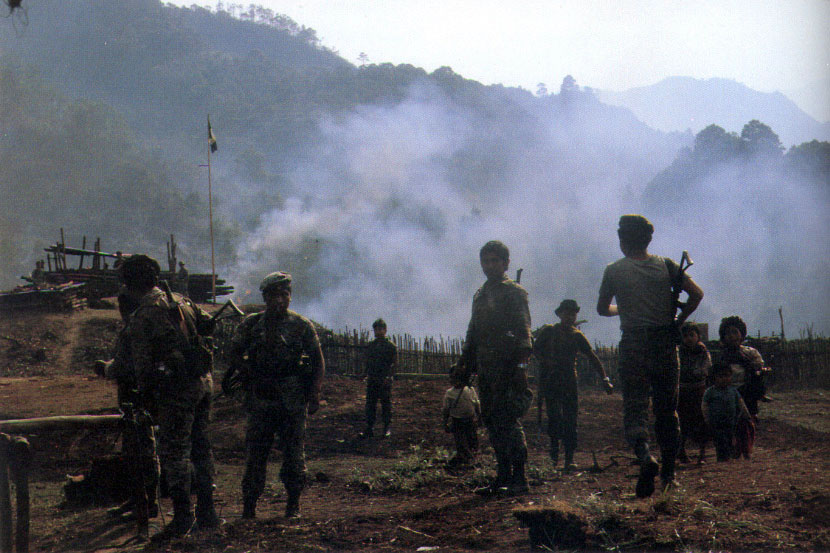
Army occupation of Río Azul model village, Nebaj, Quiché. Photograph courtesy of Jean-Marie Simon, Guatemala: Eternal Spring, Eternal Tyranny.

Operation Sofia: Documenting Genocide in Guatemala

National Security Archive Electronic Briefing Book No. 297

September 10, 2011, Washington, DC – The Guatemalan army, under the direction of military ruler Efraín Ríos Montt, carried out a deliberate counterinsurgency campaign in the summer of 1982 aimed at massacring thousands of indigenous peasants, according to a comprehensive set of internal records presented as evidence to the Spanish National Court and posted today by the National Security Archive on its Web site. The files on “Operation Sofia” detail official responsibility for what the 1999 UN-sponsored Historical Clarification Commission determined were “acts of genocide against groups of Mayan people.”

The National Security Archive’s Kate Doyle presented the documentation as evidence in the international genocide case, which is under investigation by Judge Santiago Pedraz in Madrid. Ms. Doyle testified today before Judge Pedraz on the authenticity of the documents, which were obtained from military intelligence sources in Guatemala. Earlier this year, Defense Minister Gen. Abraham Valenzuela González claimed that the military could not locate the documents or turn them over to a judge in Guatemala, as ordered by the Guatemalan Constitutional Court in 2008.

After months of analysis, which included evaluations of letterheads and signatures on the documents and comparisons to other available military records, Doyle said, “we have determined that these records were created by military officials during the regime of Efraín Ríos Montt to plan and implement a ‘scorched earth’ policy on Mayan communities in El Quiché. The documents record the military’s genocidal assault against indigenous populations in Guatemala.”

The Archive’s Guatemala project has a long track record of obtaining and authenticating internal records on Guatemalan repression. In 1999, Ms. Doyle obtained a “death squad diary”—a logbook of kidnappings, secret detentions, torture, disappearances and executions between 1983 and 1985 kept by the feared “Archivo,” a secret intelligence unit controlled by President Oscar Humberto Mejía Víctores. Although the military claimed the document was a fabrication, a team of experts led by Doyle was able to establish its authenticity. The logbook has been accepted as official, authentic evidence by the Inter-American Human Rights Commission.

The appearance of the original “Operation Sofía” documents provides the first public glimpse into secret military files on the counterinsurgency campaign that resulted in massacres of tens of thousands of unarmed Mayan civilians during the early 1980s, and displaced hundreds of thousands more as they fled the Army’s attacks on their communities. The records contain explicit references to the killing of unarmed men, women and children, the burning of homes, destruction of crops, slaughter of animals and indiscriminate aerial bombing of refugees trying to escape the violence.

Among the 359 pages of original planning documents, directives, telegrams, maps, and hand-written patrol reports is the initial order to launch the operation issued on July 8, 1982, by Army Chief of Staff Héctor Mario López Fuentes. The records make clear that “Operation Sofía” was executed as part of the military strategy of Guatemala’s de facto president, Gen. Efraín Ríos Montt, under the command and control of the country’s senior military officers, including then Vice Minister of Defense Gen. Mejía Víctores. Both men are defendants in the international genocide case in front of the Spanish Court.

In 1999, the UN-sponsored Historical Clarification Commission concluded that the Guatemalan Army had committed “massacres, human rights violations, and other atrocities” against Mayan communities that “illustrated a government policy of genocide.” Due to military stonewalling, which included refusing to turn over internal records, the Commission based its findings almost exclusively on testimony from witnesses and perpetrators, human rights reports, and data from exhumations. The Commission also drew on declassified U.S. government documents obtained through the Freedom of Information Act and provided by the National Security Archive.

The posting today includes an analysis by Kate Doyle of the Operation Sofia documents, as well as photographs from the Ixil region taken in 1982 by photojournalist and human rights advocate, Jean-Marie Simon.


Documents

Document 1
July 8 – August 20, 1982
Operación Sofía
Guatemalan Armed Forces

Complete reportLow resolution – (18 MB) | High resolution – (70 MB)

Report in sectionsPart 1 | Part 2 | Part 3 | Part 4

The Operation Sofía archive is a bound collection of 359 pages of documents sent to and from the Army General Staff (Estado Mayor General del Ejército – EMGE), the Commander of the Guatemalan Airborne Troops – who planned and ran the operation – the Commander of the special counterinsurgency Task Force “Gumarcaj,” the Commander of the Huehuetenango Military Zone, and the commanding officers of the Army battalions, companies and patrol units assigned to carry out the offensive.

Document 2Excerpt from an analysis of the Operation Sofía documents by Kate Doyle

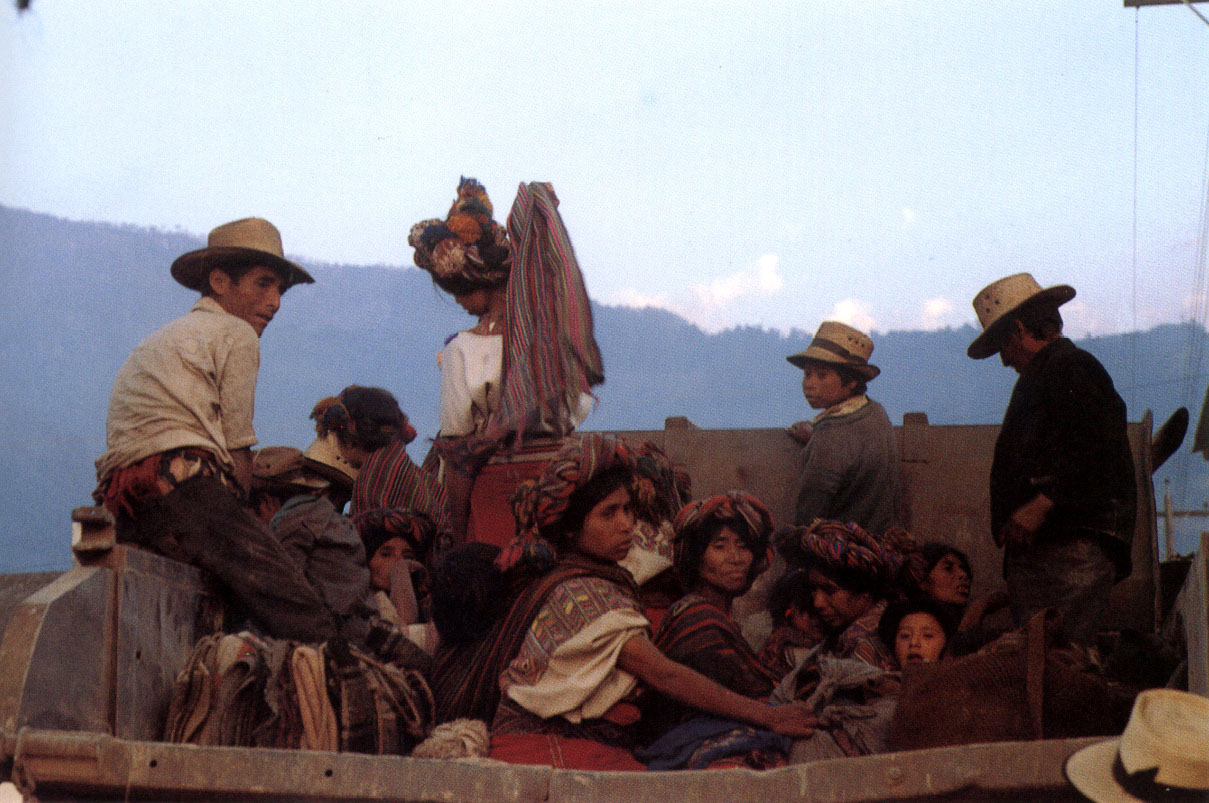
Refugees being brought into town on trucks following army sweeps into mountainsides, Nebaj, Quiche. Photograph courtesy of Jean-Marie Simon, Guatemala: Eternal Spring, Eternal Tyranny.

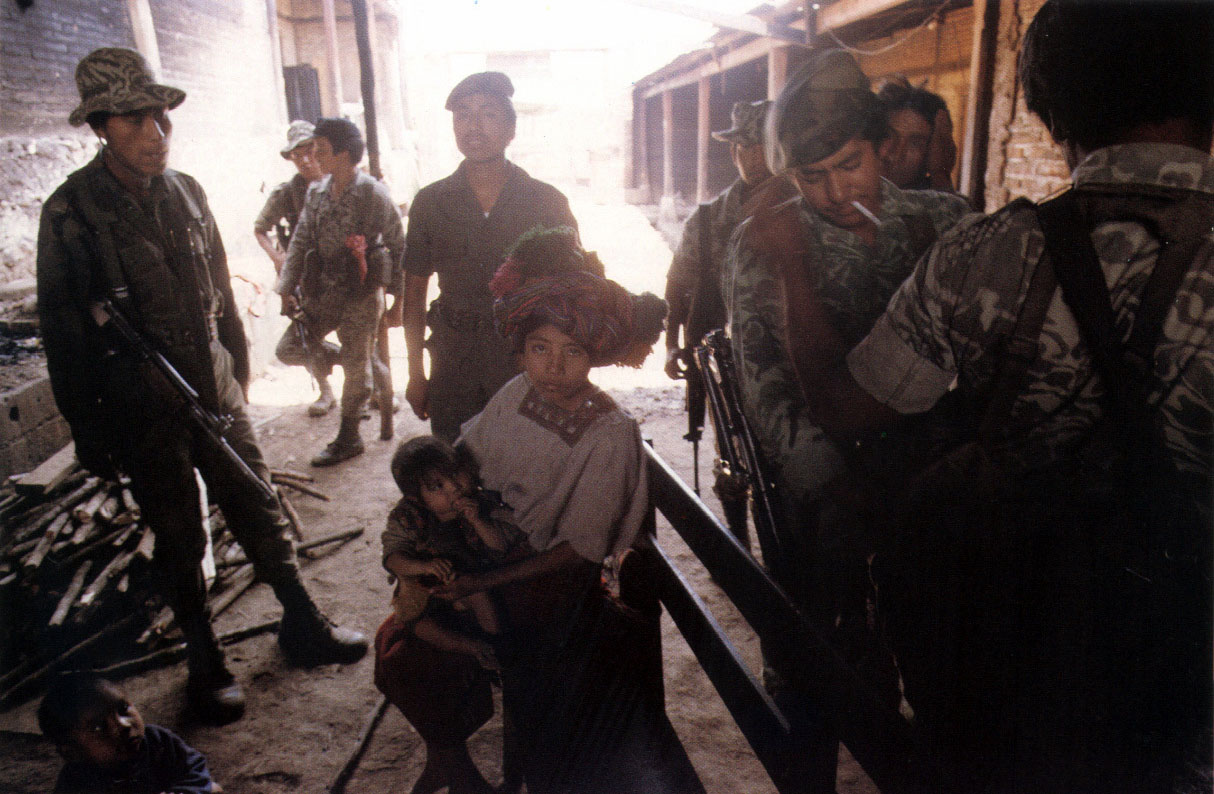
Interrogation of woman and child, suspected subversives, at army garrison, Chajul, Quiché. Photograph courtesy of Jean-Marie Simon, Guatemala: Eternal Spring, Eternal Tyranny.

TOP-SECRET: Ex-Kaibil Officer Connected to Dos Erres Massacre Arrested in Alberta, Canada

Graduation ceremony at the school for the Guatemalan Army’s elite Kaibil, counterinsurgency unit formed in the mid-1970s. [Photo © Jean-Marie Simon]

Ex-Kaibil Officer Connected to Dos Erres Massacre Arrested in Alberta, Canada

Declassified documents show that U.S. officials knew the Guatemalan Army was responsible for the 1982 mass murder

National Security Archive Electronic Briefing Book No. 316

Kaibil unit on Army Day, Campo de Marte field, Guatemala City. [Photo © Jean-Marie Simon]

Washington, D.C. – August 30, 2011 – Jorge Vinicio Sosa Orantes was arrested in Alberta, Canada on January 18, 2011 on charges of naturalization fraud in the United States. Sosa Orantes, 52, is a former commanding officer of the Guatemalan Special Forces, or Kaibil unit, which brutally murdered more than 250 men, women and children during the 1982 massacre in Dos Erres, Guatemala. Sosa Orantes, a resident of Riverside County, California where he was a well known martial arts instructor, was arrested near the home of a relative in Lethbridge, Alberta, Canada. The charges for which he was arrested stem from an indictment by the United States District Court, Central District of California on charges of making false statements under oath on his citizenship application. Sosa Orantes will come before the Canadian court in Calgary to face possible extradition to the United States.

In an interview with the Calgary Sun, U.S. Justice Department prosecutor David Gates said that the extradition request was not a result of the allegations against Sosa Orantes for his involvement in the massacre; his extradition is being requested for alleged naturalization fraud. However, considering the similar case against Gilberto Jordan, it is possible that the precedence set with the ruling on that case may affect the outcome of Sosa Orantes’s case.

On September 16, 2010 in a historic ruling, former Guatemalan special forces soldier Gilberto Jordán, who confessed to having participated in the 1982 massacre of hundreds of men, women and children in Dos Erres, Guatemala, was sentenced today by a judge in a south Florida courtroom to serve ten years in federal prison for lying on his citizenship application about his role in the crime. Calling the massacre, “reprehensible,” U.S. District Judge William Zloch handed down the maximum sentence allowed for naturalization fraud, stating he wanted the ruling to be a message to “those who commit egregious human rights violations abroad” that they will not find “safe haven from prosecution” in the United States.

On May 5, 2010, agents from U.S. Immigration and Customs Enforcement (ICE) arrested Gilberto Jordan, 54, in Palm Beach County, Florida, based on a criminal complaint charging Jordán with lying to U.S. authorities about his service in the Guatemalan Army and his role in the 1982 Dos Erres massacre. The complaint alleged that Jordán, a naturalized American citizen, was part of the special counterinsurgency Kaibiles unit that carried out the massacre of hundreds of residents of the Dos Erres village located in the northwest Petén region. Jordán allegedly helped kill unarmed villagers with his own hands, including a baby he allegedly threw into the village well.

The massacre was part of the Guatemalan military’s “scorched earth campaign” and was carried out by the Kaibiles ranger unit. The Kaibiles were specially trained soldiers who became notorious for their use of torture and brutal killing tactics. According to witness testimony, and corroborated through U.S. declassified archives, the Kaibiles entered the town of Dos Erres on the morning of December 6, 1982, and separated the men from women and children. They started torturing the men and raping the women and by the afternoon they had killed almost the entire community, including the children. Nearly the entire town was murdered, their bodies thrown into a well and left in nearby fields. The U.S. documents reveal that American officials deliberated over theories of how an entire town could just “disappear,” and concluded that the Army was the only force capable of such an organized atrocity. More than 250 people are believed to have died in the massacre.

The Global Post news organization conducted an investigative report into the investigation of the Guatemalan soldiers living in the United States and cited declassified documents released to the National Security Archive’s Guatemala Documentation Project under the Freedom of Information Act. These documents are part of a collection of files assembled by the Archive and turned over to Guatemala’s truth commission investigators, who used the files in the writing of their ground-breaking report, “Guatemala: Memory of Silence.” [see CEH section on Dos Erres]

The documents include U.S. Embassy cables that describe first-hand accounts by U.S. officials who traveled to the area of Dos Erres and witnessed the devastation left behind by the Kaibiles. Based on their observations and information obtained from sources during their trip, the American officials concluded “that the party most likely responsible for this incident is the Guatemalan Army.”


Declassified U.S. Documents on Kaibiles and the Dos Erres Massacre

December 1980
Military Intelligence Summary (MIS), Volume VIII–Latin America
U.S. Defense Intelligence Agency, Secret, Intelligence Summary, 12 pages

Photos courtesy of Jean-Marie Simon, Guatemala: Eternal Spring, Eternal Tyranny. More photos of Guatemala can be found in Jean-Marie Simon’s newly-released Spanish version of her book Guatemala: Eterna Primavera, Eterna Tiranía.

The Defense Intelligence Agency periodically produces intelligence summary reports with information on the structure and capabilities of foreign military forces. On page six of this 1980 summary on the Guatemalan military, the DIA provides information on the Kaibil (ranger) counterinsurgency training center, which is located in La Pólvora, in the Péten. The report describes how each of Guatemala’s infantry battalions has a Kaibil platoon, “which may be deployed as a separate small unit. These platoons are used as cadre for training other conscripts in insurgency and counterinsurgency techniques and tactics. The Air Force sends personnel to the Kaibil School for survival training.”

November 19, 1982
Army Establishes a Strategic Reaction Force
U.S. Defense Intelligence Agency, Confidential, Cable, 2 pages

Less than a month before the Dos Erres killings, the DIA reports on the creation of a “strategic reaction force” made up of 20 Kaibil ranger instructors based out of Guatemala City’s Mariscal Zavala Brigade. The special unit was assembled in order to carry out the mission “of quickly deploying to locations throughout the country to seek and destroy guerrilla elements.” The document indicates that the Kaibil unit was placed under direct control of Guatemala’s central military command. It states; “the unit’s huge success in previous engagement with the enemy have prompted the Guatemalan Army General Staff (AGS) to assume direct command and control of this unit.”

December 10, 1982
Guatemalan Counter Terrorism Capabilities
U.S. Embassy in Guatemala, Secret Cable, 3 pages

Days after the Dos Erres massacre the U.S. Embassy in Guatemala sends a secret cable back to Washington with information on the counter-terrorist tactical capability of the Guatemalan police and military forces. The cable reports that a Kaibil unit, based in the Mariscal Zavala Brigade headquarters, “has recently been deployed to the Petén, and is now operationally under the Poptún Military Bridage.”

This reporting coincides with the CEH and OAS summary of the events leading up to the Dos Erres massacre.

December 28, 1982
Alleged Massacre of 200 at Village of Dos R’s, Petén
U.S. Embassy in Guatemala, Secret Cable, 3 pages 

As information begins to surface about the Dos Erres massacre U.S. officials look into the matter and report on information obtained through a “reliable embassy source” who tells U.S. officials that the Guatemalan Government Army may have massacred the 200 villagers of Dos Erres. According to the source, an Army unit disguised as guerrillas entered the Dos Erres village gathered the people together and demanded their support. The source tells officials that the villagers knew they were not with the guerrilla, and did not comply with their demands. One villager who managed to escape later recounts the story to people in Las Cruces, 12 kilometers from Dos Erres, and to the Embassy source who relays the information to American officials. Another witness tells the source that the village was completely deserted, and claimed to have found burnt identification cards in the nearby Church.  They also claim that the Army came back to the village a few days later and took roofing and furniture to the Army Base in Las Cruces.

The U.S. officials offer possible theories on why no bodies were found, and on how the entire Dos Erres population could have just “disappeared.” One theory was that the Army killed everyone in the village, dumped the bodies into the well, and covered the well over. This was based on the local testimonies of those who had gone into the village and saw that the well was covered over, but they were afraid to look inside.

The cable goes on to say that because of the reliability of the source, and the seriousness of the allegations, that an embassy office will go to investigate on Dec. 30th, 1982.

December 31, 1982
Possible Massacre in “Dos R’s”, El Petén
U.S. Embassy in Guatemala, Secret Cable, 4 pages

On December 30th three mission members from the U.S. Embassy and a Canadian diplomat visit Las Cruces in Poptún to investigate the allegations of the Dos R’s massacre. The document verifies the existence of the Dos Erres village, noting that the settlement was deserted and many of the houses burnt to the ground.

The Mission Team visit the Army Base in Poptún, El Petén, where they speak with the operations officer (S3), who tells the mission members that the area near Las Cruces was exceptionally dangerous because of recent guerrilla activity. Army officials explain how Dos Erres “had suffered from a guerrilla attack in early December,” and that it would pose a considerable risk for them to visit the town.  From Poptún, the mission Members fly directly to the town of Las Cruces (using the directions provided by their source) and then to the village of Las Dos Erres. When they reach Dos Erres, however, the helicopter pilot refuses to touch down, but agrees to sweep low over the area. From this view the Embassy officials could see that houses had been “razed or destroyed by fire.” They then fly back to Las Cruces to speak with locals, including a member of the local civil defense patrol (PAC) and a “confidant of the Army in the area.” He tells officials that the Army was responsible for the disappearance of the people in Dos Erres and that he had been told to keep out of the area in early December, because the army was going to “sweep through.” He also confirms the prior reports that the Army officials wore civilian dress during the sweep, but had identifiable Army combat boots and Galil rifles. The cable notes that this information matches that of previous reftel source.

Based on the information obtained during their trip, the cable reports that “Embassy must conclude that the party most likely responsible for this incident is the Guatemalan Army.”

TOP-SECRET: Ex-Kaibil Officer Connected to Dos Erres Massacre Arrested in Alberta, Canada

Graduation ceremony at the school for the Guatemalan Army’s elite Kaibil, counterinsurgency unit formed in the mid-1970s. [Photo © Jean-Marie Simon]

Washington, D.C. – January 20, 2011 – Jorge Vinicio Sosa Orantes was arrested in Alberta, Canada on January 18, 2011 on charges of naturalization fraud in the United States. Sosa Orantes, 52, is a former commanding officer of the Guatemalan Special Forces, or Kaibil unit, which brutally murdered more than 250 men, women and children during the 1982 massacre in Dos Erres, Guatemala. Sosa Orantes, a resident of Riverside County, California where he was a well known martial arts instructor, was arrested near the home of a relative in Lethbridge, Alberta, Canada. The charges for which he was arrested stem from an indictment by the United States District Court, Central District of California on charges of making false statements under oath on his citizenship application. Sosa Orantes will come before the Canadian court in Calgary to face possible extradition to the United States.

In an interview with the Calgary Sun, U.S. Justice Department prosecutor David Gates said that the extradition request was not a result of the allegations against Sosa Orantes for his involvement in the massacre; his extradition is being requested for alleged naturalization fraud. However, considering the similar case against Gilberto Jordan, it is possible that the precedence set with the ruling on that case may affect the outcome of Sosa Orantes’s case.

On September 16, 2010 in a historic ruling, former Guatemalan special forces soldier Gilberto Jordán, who confessed to having participated in the 1982 massacre of hundreds of men, women and children in Dos Erres, Guatemala, was sentenced today by a judge in a south Florida courtroom to serve ten years in federal prison for lying on his citizenship application about his role in the crime. Calling the massacre, “reprehensible,” U.S. District Judge William Zloch handed down the maximum sentence allowed for naturalization fraud, stating he wanted the ruling to be a message to “those who commit egregious human rights violations abroad” that they will not find “safe haven from prosecution” in the United States.

On May 5, 2010, agents from U.S. Immigration and Customs Enforcement (ICE) arrested Gilberto Jordan, 54, in Palm Beach County, Florida, based on a criminal complaint charging Jordán with lying to U.S. authorities about his service in the Guatemalan Army and his role in the 1982 Dos Erres massacre. The complaint alleged that Jordán, a naturalized American citizen, was part of the special counterinsurgency Kaibiles unit that carried out the massacre of hundreds of residents of the Dos Erres village located in the northwest Petén region. Jordán allegedly helped kill unarmed villagers with his own hands, including a baby he allegedly threw into the village well.

The massacre was part of the Guatemalan military’s “scorched earth campaign” and was carried out by the Kaibiles ranger unit. The Kaibiles were specially trained soldiers who became notorious for their use of torture and brutal killing tactics. According to witness testimony, and corroborated through U.S. declassified archives, the Kaibiles entered the town of Dos Erres on the morning of December 6, 1982, and separated the men from women and children. They started torturing the men and raping the women and by the afternoon they had killed almost the entire community, including the children. Nearly the entire town was murdered, their bodies thrown into a well and left in nearby fields. The U.S. documents reveal that American officials deliberated over theories of how an entire town could just “disappear,” and concluded that the Army was the only force capable of such an organized atrocity. More than 250 people are believed to have died in the massacre.

The Global Post news organization conducted an investigative report into the investigation of the Guatemalan soldiers living in the United States and cited declassified documents released to the National Security Archive’s Guatemala Documentation Project under the Freedom of Information Act. These documents are part of a collection of files assembled by the Archive and turned over to Guatemala’s truth commission investigators, who used the files in the writing of their ground-breaking report, “Guatemala: Memory of Silence.” [see CEH section on Dos Erres]

The documents include U.S. Embassy cables that describe first-hand accounts by U.S. officials who traveled to the area of Dos Erres and witnessed the devastation left behind by the Kaibiles. Based on their observations and information obtained from sources during their trip, the American officials concluded “that the party most likely responsible for this incident is the Guatemalan Army.”


Declassified U.S. Documents on Kaibiles and the Dos Erres Massacre

December 1980
Military Intelligence Summary (MIS), Volume VIII–Latin America
U.S. Defense Intelligence Agency, Secret, Intelligence Summary, 12 pages

Photos courtesy of Jean-Marie Simon, Guatemala: Eternal Spring, Eternal Tyranny. More photos of Guatemala can be found in Jean-Marie Simon’s newly-released Spanish version of her book Guatemala: Eterna Primavera, Eterna Tiranía.

The Defense Intelligence Agency periodically produces intelligence summary reports with information on the structure and capabilities of foreign military forces. On page six of this 1980 summary on the Guatemalan military, the DIA provides information on the Kaibil (ranger) counterinsurgency training center, which is located in La Pólvora, in the Péten. The report describes how each of Guatemala’s infantry battalions has a Kaibil platoon, “which may be deployed as a separate small unit. These platoons are used as cadre for training other conscripts in insurgency and counterinsurgency techniques and tactics. The Air Force sends personnel to the Kaibil School for survival training.”

November 19, 1982
Army Establishes a Strategic Reaction Force
U.S. Defense Intelligence Agency, Confidential, Cable, 2 pages

Less than a month before the Dos Erres killings, the DIA reports on the creation of a “strategic reaction force” made up of 20 Kaibil ranger instructors based out of Guatemala City’s Mariscal Zavala Brigade. The special unit was assembled in order to carry out the mission “of quickly deploying to locations throughout the country to seek and destroy guerrilla elements.” The document indicates that the Kaibil unit was placed under direct control of Guatemala’s central military command. It states; “the unit’s huge success in previous engagement with the enemy have prompted the Guatemalan Army General Staff (AGS) to assume direct command and control of this unit.”

December 10, 1982
Guatemalan Counter Terrorism Capabilities
U.S. Embassy in Guatemala, Secret Cable, 3 pages

Days after the Dos Erres massacre the U.S. Embassy in Guatemala sends a secret cable back to Washington with information on the counter-terrorist tactical capability of the Guatemalan police and military forces. The cable reports that a Kaibil unit, based in the Mariscal Zavala Brigade headquarters, “has recently been deployed to the Petén, and is now operationally under the Poptún Military Bridage.”

This reporting coincides with the CEH and OAS summary of the events leading up to the Dos Erres massacre.

December 28, 1982
Alleged Massacre of 200 at Village of Dos R’s, Petén
U.S. Embassy in Guatemala, Secret Cable, 3 pages 

As information begins to surface about the Dos Erres massacre U.S. officials look into the matter and report on information obtained through a “reliable embassy source” who tells U.S. officials that the Guatemalan Government Army may have massacred the 200 villagers of Dos Erres. According to the source, an Army unit disguised as guerrillas entered the Dos Erres village gathered the people together and demanded their support. The source tells officials that the villagers knew they were not with the guerrilla, and did not comply with their demands. One villager who managed to escape later recounts the story to people in Las Cruces, 12 kilometers from Dos Erres, and to the Embassy source who relays the information to American officials. Another witness tells the source that the village was completely deserted, and claimed to have found burnt identification cards in the nearby Church.  They also claim that the Army came back to the village a few days later and took roofing and furniture to the Army Base in Las Cruces.

The U.S. officials offer possible theories on why no bodies were found, and on how the entire Dos Erres population could have just “disappeared.” One theory was that the Army killed everyone in the village, dumped the bodies into the well, and covered the well over. This was based on the local testimonies of those who had gone into the village and saw that the well was covered over, but they were afraid to look inside.

The cable goes on to say that because of the reliability of the source, and the seriousness of the allegations, that an embassy office will go to investigate on Dec. 30th, 1982.

December 31, 1982
Possible Massacre in “Dos R’s”, El Petén
U.S. Embassy in Guatemala, Secret Cable, 4 pages

On December 30th three mission members from the U.S. Embassy and a Canadian diplomat visit Las Cruces in Poptún to investigate the allegations of the Dos R’s massacre. The document verifies the existence of the Dos Erres village, noting that the settlement was deserted and many of the houses burnt to the ground.

The Mission Team visit the Army Base in Poptún, El Petén, where they speak with the operations officer (S3), who tells the mission members that the area near Las Cruces was exceptionally dangerous because of recent guerrilla activity. Army officials explain how Dos Erres “had suffered from a guerrilla attack in early December,” and that it would pose a considerable risk for them to visit the town.  From Poptún, the mission Members fly directly to the town of Las Cruces (using the directions provided by their source) and then to the village of Las Dos Erres. When they reach Dos Erres, however, the helicopter pilot refuses to touch down, but agrees to sweep low over the area. From this view the Embassy officials could see that houses had been “razed or destroyed by fire.” They then fly back to Las Cruces to speak with locals, including a member of the local civil defense patrol (PAC) and a “confidant of the Army in the area.” He tells officials that the Army was responsible for the disappearance of the people in Dos Erres and that he had been told to keep out of the area in early December, because the army was going to “sweep through.” He also confirms the prior reports that the Army officials wore civilian dress during the sweep, but had identifiable Army combat boots and Galil rifles. The cable notes that this information matches that of previous reftel source.

Based on the information obtained during their trip, the cable reports that “Embassy must conclude that the party most likely responsible for this incident is the Guatemalan Army.”

27 Years Later, Justice for Fernando García

Family snapshot of Nineth de García, daughter Alejandra and husband Fernando before his abduction on February 18, 1984. Photo from “Guatemala, The Group for Mutual Support,” An Americas Watch Report. [Courtesy of Jean-Marie Simon]
Update on the conviction of the Guatemalan police officers
responsible for Fernando García’s “forced disappearance”

Washington, D.C., February 18, 2011 – Twenty-seven years ago today, Guatemalan labor activist Edgar Fernando García was shot and kidnapped by government security forces off a street in downtown Guatemala City. He was never seen again. In recognition of the anniversary of his disappearance, the National Security Archive today posts the complete text of the historic ruling issued last October by a Guatemalan court that convicted two former policemen to 40 years in prison for the crime, as well as key documents from the Guatemalan National Police Archive that were used in the prosecution.

Fernando García’s family continues to fight for justice inside Guatemala and internationally. The groundbreaking trial that found Héctor Roderico Ramírez Ríos and Abraham Lancerio Gómez – both low-ranking police agents at the time of the abduction – guilty of García’s “forced disappearance” ended with the court’s unprecedented order that the government investigate their superior officers. Meanwhile in Washington, where the García case has been pending before the Inter-American Human Rights Commission for over a decade, the commission announced on February 9 its decision to send the case to the Inter-American Court in Costa Rica due to Guatemala’s failure to act on commission findings.

The Fernando García trial took place over several days last October in a crowded courtroom in the “Tribunals Tower” in downtown Guatemala City, and brought together an extraordinary array of experts and witnesses testifying on behalf of the prosecution. (To see a more complete description of the first days of the trial, see Kate Doyle’s blog posting.) Congresswomen Nineth Montenegro, García’s wife and mother of their infant daughter, Alejandra, at the time of his abduction, told the court about her anguished search for her husband in the months following his disappearance, leading to the creation of one of Guatemala’s first human rights organizations, the Mutual Support Group (GAM). Alejandra García Montenegro, now a lawyer who served as the querellante adhesivo or “private prosecutor” in the case, spoke movingly at the trial’s end about the impact of his disappearance on her family and her own childhood. García’s elderly mother also testified, expressing the pain she has endured for almost three decades in losing her son without knowing his ultimate fate.

At the heart of the prosecution’s case were the official records of the former National Police of Guatemala, recovered by the Office of the Human Rights Prosecutor in 2005 and now being examined for evidence of human right crimes. Velia Muralles Bautista, an investigator with the Historic Archives of the National Police (AHPN), gave expert testimony on hundreds of police records connected to the February 1984 counterinsurgency operation that resulted in Fernando García’s abduction. Muralles drew particular attention to a handful of key documents that contained powerful evidence of the Guatemalan government’s role in planning and carrying out García’s capture. They included records of the police Joint Operations Center (Centro de Operaciones Conjuntas, or COC), which controlled and commanded the police units involved in the operation [documents 3, 4, 5, and 6]; a hand-drawn map of Guatemala City, assigning Zone 11— where García and his companion, Danilo Chinchilla, were captured — to the Fourth Corps of the National Police [document 7]; and the recommendation from the National Police hierarchy that the defendants be considered for medals for their heroic actions in the counterinsurgency operation on that day, at the time, and in the place of the capture of Edgar [document 2].

On the last days of the trial, Marco Tulio Alvarez, head of Guatemala’s Archivos de la Paz (Archives of Peace), testified on the political and historical context of Fernando García’s disappearance. His testimony addressed the coordination between government agencies in “cleansing operations”, specifically between the military and the National Police. In his testimony, Tulio Alvarez referred to documents from the AHPN, the Death Squad Diary, and declassified U.S. documents obtained by the National Security Archive, among other Guatemalan government documents. Tulio Alvarez used this documentary evidence to paint a picture for the court of government repression of those who spoke against the government, groups the Guatemalan government considered “internal enemies.” His testimony touched on the regime’s desire to “annihilate local secret communities, and military units…” which was described in a military document, Plan Victoria 82.

For a more detailed account of the last days of the trial and other witnesses, see the report written by C. Carolina López, our associate in Guatemala.

Now, the pressure is on the Guatemalan government, not only from the ruling of the three judges in Guatemala who heard this case, but also the pending hearing before the Inter-American Court in Costa Rica. An indictment and trial of superior officers allegedly responsible for ordering the cleansing operations would truly be a landmark development for human rights justice in Guatemala.


Read the Documents

Document 1
October 28, 2010
Organismo Judicial, Guatemala. C-01069-1997-00001 Oficial Tercero. Tribunal Octavo de Sentencia Penal, Narcoactividad y Delitos Contra el Ambiente, Guatemala.(Judicial Body of Guatemala, Third Official, Eighth Criminal Court Convcition, Drug-trafficking and Environmental Crimes, Guatemala)
93 pages

This document is the official ruling of the Guatemalan court, which convicted former National Police officers Héctor Roderico Ramírez Ríos and Abraham Lancerio Gómez of forced disappearance in the case of Edgar Fernando García. The two men received the maximum sentence of 40 years in prison. The ruling, written by three Guatemala judges, acknowledges that Edgar Fernando García was illegally detained; the disappearance was committed by state security agents within national security policy; and the crime was against the individual liberties and freedoms of Fernando García.

The official ruling also includes parts of the testimony from eye witnesses, as well as expert witness testimony on the documents from the Historical Archive of the National Police (AHPN) and the declassified U.S. government documents from the National Security Archive collections.

Document 2
Undated
Cuarto Cuerpo Guatemala, Nomina del Personal del Cuarto Cuerpo de la Policia Nacional que se hace a distinciones, según el reclamento de condecoraciones. (Fourth Corps Guatemala, Nomination of Personnel of the Fourth Corps of the National Police for distinction, according to regulations for awards)
Souce: Historical Archive of the National Police of Guatemala (Archivo Historico de la Policia Nacional)
3 pages

This documents records the nomination of four police officers, Hector Roderico Ramírez Ríos, Alfonso Guillermo de Leon, Hugo Rolando Gomez Osorio, and Abraham Lancerio Gómez to receive awards for their actions on February 18, 1984 at 11:00 in the morning with their encounter with “two subversives” who had subversive propaganda and fire arms at the “Mercado de Guarda” in zone 11. This was the exact date, time, and place that Fernando García and his companion Danilo Chinchilla were abducted. In her testimony, expert witness Velia Muralles used this document to demonstrate that these four former National Police officers took part in the crime of the forced disappearance of Fernando García because of the awards they received for participating in the cleansing operation the morning he was shot and disappeared.

Document 3
February 10, 1984
Oficio COC – 165 – WA, Guatemala.
Centro de Operaciones Conjuntas (Joint Operations Center)
Souce: Historical Archive of the National Police of Guatemala (Archivo Historico de la Policia Nacional)
1 page

Document 4
February 11, 1984
Oficio COC – 173 – WA, Guatemala.
Centro de Operaciones Conjuntas (Joint Operations Center)
Source: Historical Archive of the National Police of Guatemala (Archivo Historico de la Policia Nacional)
1 page

Document 5
February 12, 1984
Oficio COC/185-opp, Guatemala.
Centro de Operaciones Conjuntas (Joint Operations Center)
Historical Archive of the National Police of Guatemala (Archivo Historico de la Policia Nacional)
1 page

Document 6
February 17, 1984
Oficio COC/207-laov, Guatemala
Centro de Operaciones Conjuntas (Joint Operations Center)
Historical Archive of the National Police of Guatemala (Archivo Historico de la Policia Nacional)
1 page

These four documents (three through six) are from the “Centro de Operaciones Conjuntas” or COC, which was the “Center of Cooperative Operations” between the military and the police. These documents are from February 1984, days before Fernando García was disappeared. Expert witness Muralles explained that this document showed the coordination between the military and police in the overall national strategy of “cleansing operations” or “operación limpieza.”
Document 6, from February 17, 1984 shows detailed instructions from COC Chief, Monico Antonio Cano Perez for a member of the National Police to carry out an operation on the morning of February 18, between 9:00am and 12:00pm, the exact window during which Fernando García was abducted.

Document 7
February 17, 1984
Oficio COC/201/WA, Guatemala
Centro de Operaciones Conjuntas (Joint Operations Center)
Historical Archive of the National Police of Guatemala (Archivo Historico de la Policia Nacional)
4 pages

This is another document from Joint Operations Center giving instructions to the National Police regarding cleansing operations. This documents contains two pages that show which sectors of the city were assigned to specific corps of the National Police. The second to last page, titled “Sectores de la Ciudad Capital para Operaciones Limpieza de los Cuerpos P.N.” shows that the Fourth Corps was in charge of Zone 11 for the patrol for “operacion limpieza”. The defendents, Héctor Roderico Ramírez Ríos and Abraham Lancerio Gómez, were members of the fourth corps. The last page, titled “Croquis Demostrativo Sectores Ciudad Capital Para Operacion Limpeza de los Cuerpos P.N.” is a hand-drawn map shows a yellow-gold outline for Zone 11, where Fernando García was captured.

Document 8
February 18, 1984
Cuadro para control de operaciones, de los cuerpos, escuela y narcoticos, de la policia nacional en diferentes zonas de la ciudad capital. (Chart for orders of operations, of the corps, school and narcotics, and of the National Police in different zones of the capital city.)
Historical Archive of the National Police of Guatemala (Archivo Historico de la Policia Nacional)
1page

This document is a logbook list of which units were assigned to patrol which areas on certain days. We see that the Fourth Corps of the National Police was assigned to patrol Zones 11 and 12 during the hours of 9:00am and 12:00pm on Feburary 18, 1984. The defendents, Héctor Roderico Ramírez Ríos and Abraham Lancerio Gómez, were members of the fourth corps.