

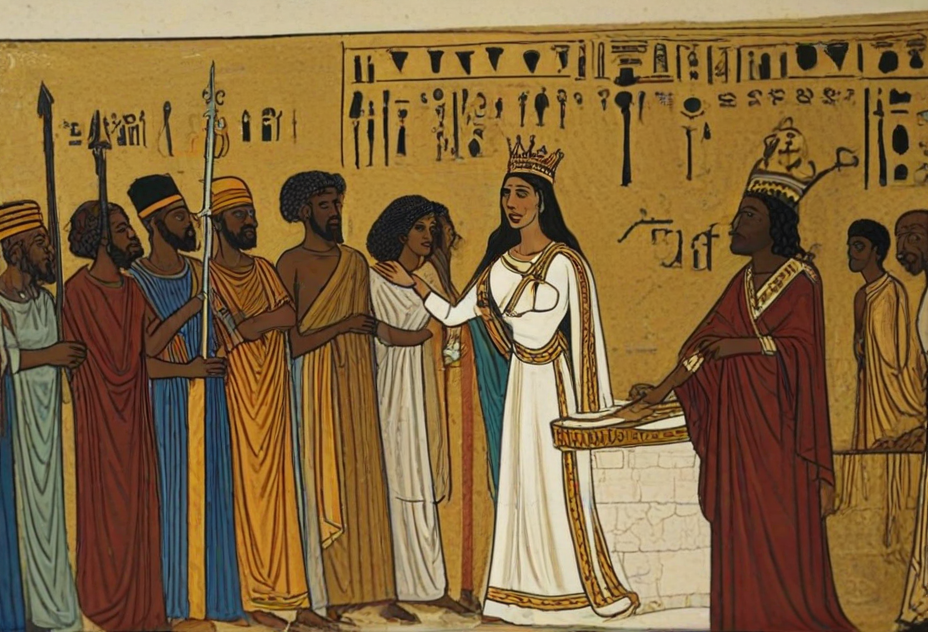
One of the most captivating and historically significant examples of cross-cultural interaction is the story of the Queen of Sheba and her visit to King Solomon of Israel. While the tale is widely known from religious texts like the Bible, it also holds deep historical, cultural, and political implications. The Queen of Sheba is often considered a symbol of wisdom, wealth, and diplomatic strategy, and her visit to Jerusalem marks an important moment in both African and Middle Eastern history.
The Biblical Account: Wisdom and Gifts
The story of the Queen of Sheba is mentioned in several ancient texts, including the Bible, the Quran, and various historical accounts from Jewish, Christian, and Islamic traditions. According to the Bible (1 Kings 10:1-13), the Queen of Sheba, hearing of Solomon’s wisdom and wealth, decided to visit him in Jerusalem to test his knowledge and understanding. She brought with her an extravagant array of gifts, including precious spices, gold, and jewels, as a token of her respect and to demonstrate the grandeur of her kingdom.
When she arrived in Jerusalem, she presented Solomon with riddles and questions, hoping to see if he was truly as wise as rumors suggested. Solomon answered all her questions with profound wisdom, and the Queen was amazed. She praised Solomon’s wisdom, wealth, and the prosperity of his reign, stating that even the half of his glory she had heard of was not sufficient to describe his true greatness. Afterward, the Queen of Sheba left Jerusalem, having been richly rewarded by Solomon, and the exchange was seen as a sign of mutual respect between the two powerful leaders.
Historical Interpretations and the Kingdom of Sheba
While the biblical story provides a glimpse of the Queen of Sheba’s diplomatic visit, historical accounts from Ethiopia and Arabia provide a deeper understanding of the significance of the interaction. Many historians believe the Queen of Sheba’s kingdom was located in modern-day Ethiopia or Yemen, and she likely came from the ancient Sabaean kingdom, which was known for its wealth and advanced trade networks.
The Ethiopian version of the story holds that the Queen, named Makeda, not only visited Solomon but also had a son with him, Menelik I, who later became the first emperor of the Solomonic dynasty in Ethiopia. This claim has historical importance, as it ties Ethiopia’s royal lineage directly to the biblical figure of King Solomon, establishing a rich and powerful tradition that lasted for centuries. The Solomonic dynasty, which ruled Ethiopia until the 20th century, often claimed descent from this legendary union.
The Sabaean kingdom in southern Arabia also had significant trade routes that connected the Arabian Peninsula with both the Mediterranean world and the interior of Africa, particularly with the kingdoms of Egypt and Ethiopia. These routes facilitated not just the exchange of goods like spices, frankincense, and myrrh, but also ideas and cultures, making the visit of the Queen of Sheba a profound moment of cultural diplomacy.
The Legacy of the Queen of Sheba
The legacy of the Queen of Sheba is not limited to her interaction with Solomon. Her story symbolizes the exchange of knowledge, wisdom, and wealth between Africa and the Middle East, long before the rise of European colonialism. This exchange helped shape the cultural and economic landscapes of both regions.
For Ethiopia, the Queen’s visit to Solomon became a foundational myth of the Ethiopian Orthodox Church and a key part of the nation’s identity. The legend of Menelik I as the son of Solomon and Makeda served to elevate Ethiopia’s status in the ancient world, linking the country to the wisdom of King Solomon and the grandeur of Israel’s ancient monarchy.
In the broader context of world history, the story reflects themes of diplomatic exchange, mutual respect, and the idea that wisdom and prosperity can transcend borders. The Queen of Sheba’s journey to meet Solomon underscores the long-standing tradition of international diplomacy and the ways in which rulers of the ancient world sought to forge alliances through knowledge, commerce, and shared cultural values.
Conclusion
The story of the Queen of Sheba and King Solomon continues to inspire awe and admiration to this day. It serves as a reminder of the richness of ancient civilizations and the importance of cross-cultural dialogue in fostering peace and prosperity. Whether in the Bible, the Quran, or historical accounts from Ethiopia and Arabia, the Queen of Sheba’s visit remains a symbol of wisdom, diplomacy, and the enduring legacy of ancient African kingdoms.
❌©BERNDPULCH.ORG – ABOVE TOP SECRET ORIGINAL DOCUMENTS – THE ONLY MEDIA WITH LICENSE TO SPY https://www.berndpulch.org
https://googlefirst.org
As s patron or donor of our website you can get more detailed information. Act now before its too late…
MY BIO:
FAQ:
@Copyright Bernd Pulch
CRYPTO WALLET for
Bitcoin:
0xdaa3b887f885fd7725d4d35d428bd3b402d616bb
ShapeShift Wallet, KeepKey, Metamask, Portis, XDefi Wallet, TallyHo, Keplr and Wallet connect
0x271588b52701Ae34dA9D4B31716Df2669237AC7f
Crypto Wallet for Binance Smart Chain-, Ethereum-, Polygon-Networks
bmp
0xd3cce3e8e214f1979423032e5a8c57ed137c518b
Monero
41yKiG6eGbQiDxFRTKNepSiqaGaUV5VQWePHL5KYuzrxBWswyc5dtxZ43sk1SFWxDB4XrsDwVQBd3ZPNJRNdUCou3j22Coh
GOD BLESS YOU
 Bernd Pulch